which functional groups are polar 2.3: biologically important macromolecules
Functional groups are a crucial aspect of chemistry and biology, as they determine the properties and behavior of many molecules. They are essentially a group of atoms that form the core of a molecule and contribute to its characteristic properties. Understanding functional groups is essential in various fields, including synthetic chemistry, drug discovery, and material science. There are several types of functional groups, each with its distinctive properties and effects on the molecule’s behavior. These include hydroxyl, carbonyl, carboxyl, amino, sulfhydryl, and phosphate groups, among others. Each group has a unique set of chemical properties, which enables them to react with other molecules in particular ways. The hydroxyl group, for instance, is a crucial feature of alcohols and many other organic compounds. It is made up of an oxygen atom bonded to a hydrogen atom and a carbon atom. This group imparts the molecule with properties such as water solubility and acidity. Carbonyl groups, on the other hand, are present in compounds such as ketones and aldehydes, which play an essential role in metabolic processes. Carboxyl groups, as the name implies, are present in carboxylic acids and confer acidic properties on the molecule. Amino groups, on the other hand, consist of a nitrogen atom bonded to two hydrogen atoms and a carbon atom and are typically found in amino acids, the building blocks of proteins. Sulfhydryl and phosphate groups are also essential in biology and biochemistry, contributing to the structure and function of various macromolecules. Functional groups can be identified using various analytical techniques, including infrared spectroscopy and nuclear magnetic resonance (NMR) spectroscopy. These methods allow scientists to determine the composition and structure of molecules and assess functional group presence and properties. Recently, researchers have been exploring the use of functional groups in advanced materials and nanotechnology. For example, the presence of functional groups on the surface of graphene can influence its electronic and chemical properties, making it a promising candidate for a wide range of applications. In conclusion, functional groups are a crucial aspect of chemistry and biology, determining the properties and behavior of many molecules. Understanding and identifying functional groups is critical in various fields, including drug discovery, synthetic chemistry, and advanced materials science.
If you are looking for 2.3: Biologically Important Macromolecules - Biology LibreTexts you’ve came to the right page. We have 5 Images about 2.3: Biologically Important Macromolecules - Biology LibreTexts like Polymer Guide: If you seek solvation, S2019_Lecture_02_Reading - Biology LibreTexts and also Polymer Guide: If you seek solvation. Here you go:
2.3: Biologically Important Macromolecules - Biology LibreTexts
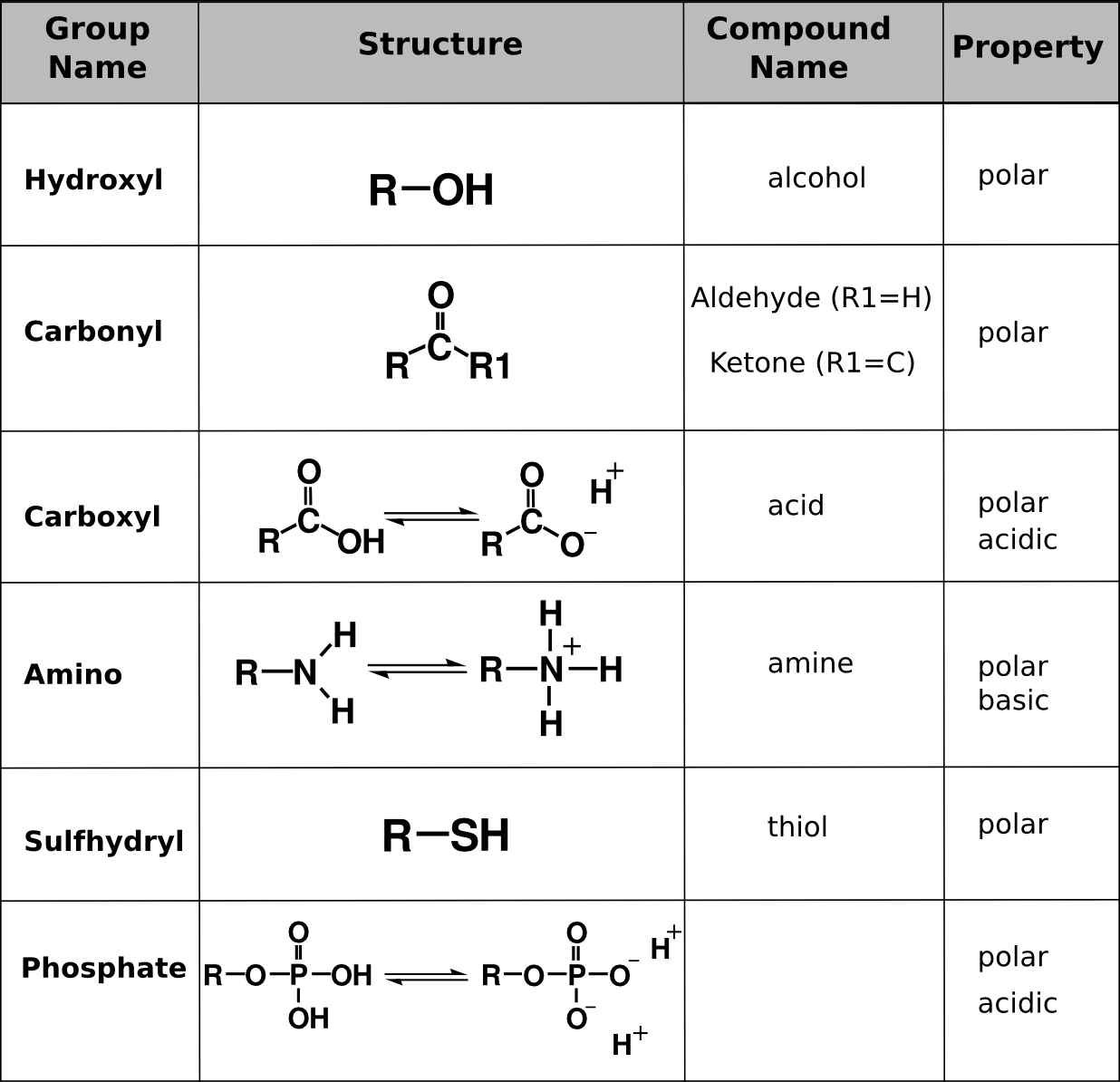 bio.libretexts.orgorganic chemistry macromolecules important functional biologically bio groups compounds table chemical biology found molecule water cells characteristics commonly libretexts apart
Polymer Guide: If You Seek Solvation
 depts.washington.edupolymer polar solvents functional groups acetone plastics if seek solvation guide allow solvated mek
S2019_Lecture_02_Reading - Biology LibreTexts
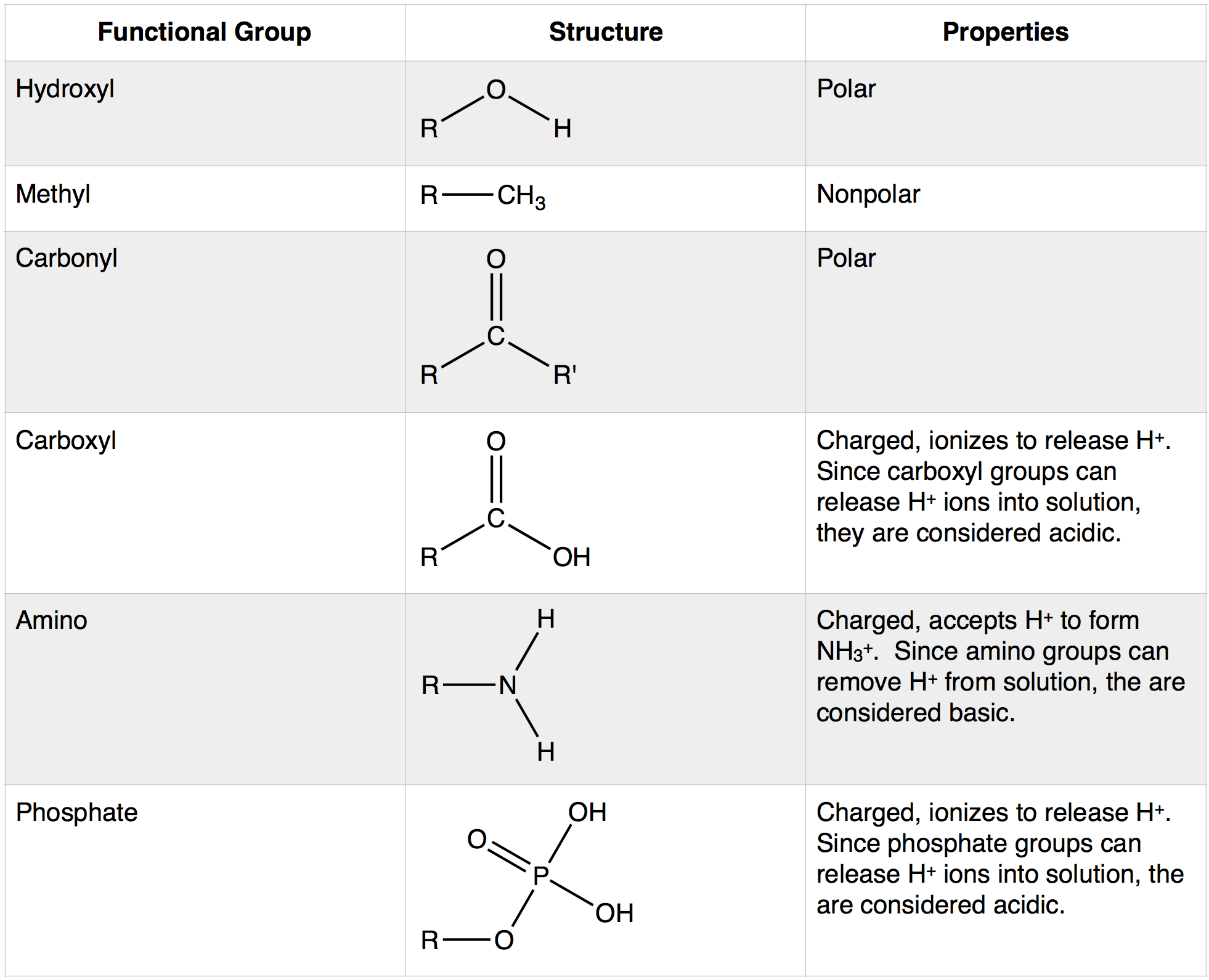 bio.libretexts.orgfunctional groups biology molecules bio different shown found figure amino hydroxyl carboxyl methyl carbonyl phosphate molecule atom these biological other
What Is A Functional Group Example - Australia Examples User Examples
 theoutdoorsgroup.comFunctional Groups Present At Oxidized Graphene Layers. Such Groups Are
 www.researchgate.netgroups graphene oxidized layers
2.3: biologically important macromolecules. Organic chemistry macromolecules important functional biologically bio groups compounds table chemical biology found molecule water cells characteristics commonly libretexts apart. Functional groups biology molecules bio different shown found figure amino hydroxyl carboxyl methyl carbonyl phosphate molecule atom these biological other